Showing posts with label historical research. Show all posts

Friday, June 10, 2016

June 10 – Not Done Yet

I’ve been feeling so stuck in my journey, my virtual travel adventure, my healthy exercise playtime.  If I can’t exercise enough to make virtual travel mileage, I can’t continue my online explorations & blogging.  I don’t want my medical recovery to take over all of my time & energy & mental exertions either.  

My journey feels stymied.  Dead in the water. 


I keep thinking about the scene in Monty Python & the Holy Grail in which the plague dead are being carted away, but one man insists that he’s not dead & not yet ready to go.  He’s probably near death, but in his efforts to stay with the living he declares more & more healthy optimism.

[excerpted] 
The Dead Collector:  Bring out yer dead.
[a man puts a body on the cart]
Large Man with Dead Body:  Here's one.
The Dead Body That Claims It Isn't:  I'm not dead.
The Dead Collector:  What?
The Dead Body That Claims It Isn't:  I'm not dead.
The Dead Collector:  'Ere, he says he's not dead.
Large Man with Dead Body:  Yes he is.
The Dead Body That Claims It Isn't:  I'm not.
The Dead Collector:  He isn't.
Large Man with Dead Body:  Well, he will be soon, he's very ill.
The Dead Body That Claims It Isn't:  I'm getting better.
Large Man with Dead Body:  No you're not, you'll be stone dead in a moment.
The Dead Body That Claims It Isn't:  I don't want to go on the cart.
Large Man with Dead Body:  Oh, don't be such a baby.
The Dead Collector:  I can't take him.
The Dead Body That Claims It Isn't:  I feel fine.
Large Man with Dead Body:  Well, can you hang around for a couple of minutes? He won't be long.
The Dead Body That Claims It Isn't:  I think I'll go for a walk.
Large Man with Dead Body:  You're not fooling anyone, you know.
The Dead Body That Claims It Isn't:  I feel happy. I feel happy.

It’s a ridiculous scene, and it doesn’t end well for the sick man, but I sometimes feel myself putting on this kind of song & dance act for the doctors, saying “Don’t write me off.”  Don’t throw me into the category of Invalid Patient with nothing left to do but nurse myself along from treatment to checkup.

A good friend reminds me that I have dealt with earlier tribulations by finding creative & subversive ways around obstacles.  I am definitely taking care of myself medically & emotionally, but I’m also looking for ways to move forward in my projects. 

So, I am working on my historical research, even if I don’t post every day.  I am cycling again, even if it’s not every day yet, and even if it’s just one or two miles at a time.  As soon as I’ve completed 15 miles, I’ll be able to resume my virtual travel exploration.  That curiosity & exploration is what makes me feel alive & can pull me forward.

Wednesday, May 25, 2016

May 25 – Debatable Immortality

In the last half of the 19th century, Miles Grant became famous as a great debater on religious questions, and his ideas influence the Smith-Horr-Blakely family of Vermont. 

Miles Grant childhood home
Miles Grant grew up on a farm in Torrington, Connecticut.  His mother was “a praying Christian”, and his father donated to the construction of a Baptist church in Torrington, Connecticut, but the family did not attend church regularly.  

As a young man, Miles Grant became a schoolteacher.   He was an atheist, and frequently criticized religion.  One time, he bought a Bible at an auction with the express purpose of making fun of it.

In December 1842, he attended a series of religious lectures by an early “Millerite” preacher, Henry Chittenden, in a Methodist meetinghouse, in order to mock him.  But at the very first lecture, Grant became convinced that “the Bible is true.”  He went to his room in Humphrey’s Hotel where he prayed secretly for four days, and “obtained pardon, peace, and joy.”  He returned to the lectures, which were extended into a month-long revival.  Grant renounced the drinking, dancing, and card-playing that he had enjoyed, and “discarded all questionable habits”.  

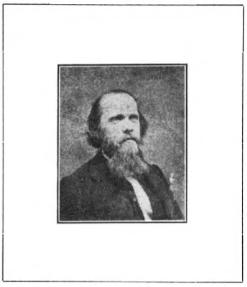
Miles Grant, age 30
For the next few years, still within the Methodist church, he joined frequent study groups and prayer groups, and continued teaching.  He began to be invited to small prayer groups in homes & schoolhouses, then was invited to meetings in other towns.  He married another believer, Mary Augusta Tolles. 

By the spring of 1850, he was convinced of the Second Coming of Jesus Christ, and dissatisfied with the response within the Methodist churches, so he quit his local Methodist church and his teaching job to become a full-time evangelist.  In 1852, he published a notice for a camp meeting, saying: 
“We are satisfied that the end is emphatically near, and that all who are not ready for the “crisis,” have no time to lose, if they intend to be saved when the king comes to gather his faithful ones.”

The most important tenet of Grant’s belief was the new doctrine of Conditional Immortality.  He rejected the traditional belief in the immortality of the soul & eternal torture of sinners & non-believers.  Adventists developed the belief that human souls were not naturally immortal, and they would merely sleep between their own death and the Second Coming (Advent) of Christ, followed by the Last Judgment before the World to Come.  This doctrine was called Conditional Immortality.  Only God’s grace could confer immortality upon righteous souls.  In Adventist literature, there is great emphasis on “awakening” the soul during one’s lifetime so that it could be reanimated at the final Resurrection.  People outside the movement were called “sleepers”. 

In arguing for the idea of Conditional Immortality, the Adventists rejected not only the eternal tortures of Hell, but also the Spiritualist notions of a limbo existence of intermediary souls, a “spirit world” afterlife seeming to be independent of God.

This new idea of Conditional Immortality appealed to educated people, and Elder Grant made it sound like a scientific truth.  
“When honest truth-seekers differ, what shall be done? Reexamine the evidence and appeal to the highest authority. In this case there are three standards to which we may appeal: science, the Bible, and current theology.  Many will not accept the Bible or current theology as a standard, but they will agree to abide by the voice of science. Then let Science speak first. “ 

Grant taught that Christians should be a holy people, consecrated to an ideal life, to earn their resurrection. 

In 1854, Miles Grant moved to Boston and began to lead his own Free Chapel in a meeting hall.  He could claim that the prayer meetings drew 40 to 50 participants and several hundred on the Sabbath.  In 1856, Elder Grant became the editor of a weekly Adventist newspaper, The World’s Crisis, with his wife’s help. 

He began to travel around New England to preach, and he was often challenged by mainstream preachers to debate religious questions on which they disagreed.  One of Elder Grant’s most famous early debates was held between Adventist preachers in Boston in November of 1858.  The question at issue was about Conditional Immortality:  “Do the Scriptures teach the doctrine of the eternal conscious suffering of the wicked?”

festive 1868 Methodist camp meeting in NY
In December 1859, a 4-evening debate was held in Seneca Falls, N.Y., on “The State of the Dead”.  Adventist Elder W.W. Clayton argued against the idea of Conditional Immortality, affirming that “When man dies, his spirit remains in a conscious state, separated from his body, until the resurrection.”  Large crowds attended. 

Between these two highly publicized debates, Mr. Grant came to Castleton to speak, probably to debate his favorite question with another preacher at Castleton Seminary.
  
In March, Hiram Horr’s sister Sarah came from neighboring Poultney to Castleton to attend the meetings.  (see letter excerpt in Mr. Grant in Castleton post)  She brought her 21-year-old nephew Lucius and a young lady from just over the state line in Hampton, New York, Miss Betsy Ann Hotchkiss.  It is unclear what the relationship may have been between Lucius & Betsy Ann.  Attending edifying lectures was one way for young people to get together at the time.  The topic for debate was probably Conditional Immortality, since he was developing his reputation on that subject at this time.  He appealed to the rationality and scriptural authority.  Sarah, Lucius, & Betsy Ann were reportedly “quite in favor of the man”. 

In 1862, Sarah Horr visited Castleton again for a week to hear Mr. Grant.  Sarah Smith Horr does not express her own opinion of the preacher’s beliefs, but she believes that he is sincere and worth listening to, whether or not he is theologically correct.

info:  Wikipedia.com
info & images:  Piper, Fred LeRoy.  Life and Labors of Miles Grant. Boston: Advent Christian Publication Society, 1915.


Sunday, May 22, 2016

May 22 – New Spiritual Truths, Eternal Debates

In 19th century New England, ministers from different Protestant denominations of Christianity challenged each other to 3-day or week-long debates over arcane spiritual issues, and people traveled across counties to hear them.  Hiram & Sarah Smith Horr were visited at least twice by his sisters, a nephew, & a young lady with them for this purpose.

What questions were being debated and discussed with so much interest?  Who were the people who were asking such questions at this time? 

Congregational
symbol
New England was mostly populated with Congregationalists, Methodists, Baptists, and Quakers.  Our own Smith-Horr-Blakely ancestors seemed to be primarily Congregationalist, but they hardly ever mention regular church attendance, and they easily visited Methodist churches as well, sometimes collaborating with Baptists, too, for a Sunday School picnic. 

During the 19th century, several radically different Christianity-based religions became popular in New England: Unitarianism, Universalism, Spiritualism, Mormonism, and Adventism.

Unitarianism is based on the idea that God is one entity, in direct contrast to Trinitarianism, which defines God as three persons in one being (Father, Son, Holy Spirit).  Unitarians believe that Jesus of Nazareth was inspired by God in his moral teachings and can thus be considered a savior, but perceive Christ as human rather than a Deity.  Unitarianism rejects the doctrines of original sin, predestination, and biblical inerrancy.  In the 19th century, Unitarians accepted the doctrine of punishment in an eternal hell.
The theology was perceived as deist, and it began to attract many people from wealthy and educated backgrounds.  In the United States, it spread first in New England, and the first official acceptance of the Unitarian faith on the part of a congregation in America was by the erstwhile Anglican King's Chapel in Boston in 1784. 
Unitarianism is considered to be a religiously liberal church.  Its guiding principles are: the concept of the unity of God,  the message and example of Jesus of Nazareth as a rational and enriching spiritual path, and the purpose of creating a world of justice, peace, and human dignity.

Universalism claims that religion is a universal human quality, not a special set of beliefs for a chosen people.  Nineteenth century Universalists claimed that all sinful and alienated human souls — because of divine love and mercy — would ultimately be reconciled to a merciful God.  Universalism emphasizes the universal principles of most religions and accepts other religions in an inclusive manner, believing in a universal reconciliation between humanity and the divine.  A belief in one common truth is also an important tenet. The “living truth” is seen as more far-reaching than national, cultural, or religious boundaries.
Another key point within the Christian Universalist theology is the understanding that mistranslations exist in many translations of the Bible, and that a translation error from Greek is the cause of most Christians’ erroneous belief in eternal punishment of souls in the afterlife.

Spiritualist
sunflower
Spiritualism is a belief that spirits of the dead have both the ability and the inclination to communicate with the living. The afterlife, or "spirit world", is seen by spiritualists as a place in which spirits continue to evolve, and thus can provide useful knowledge to living people about moral and ethical issues.  For a fuller exposition, see my blogpost of March 29, A Child's Spiritualist Funeral .


Angel Moroni
Mormonism:  Joseph Smith founded Mormonism in Western New York in the 1820s.  Smith claimed that an angel Moroni directed him to find buried golden plates which had Egyptian writing on them, from which Smith wrote the text of  the Book of Mormon.   The book described itself as a chronicle of early indigenous peoples of the Americas, known as the Nephites, portraying them as Israelites who had a belief in Christ many hundred years before his birth and who had settled in the ancient Americas. Smith began to attract his early followers while he was translating and dictating this text, then Smith said he returned the golden plates to the Angel Moroni.
Mormonism was very different from traditional Protestantism, and caused much consternation among mainstream Christians.  After Smith's death in 1844, most Mormons followed Brigham Young on his westward journey to the area that became the Utah Territory, calling themselves “The Church of Jesus Christ of Latter-day Saints” (LDS Church).  Mormons believe in an afterlife with three degrees of glory, with hell (often called spirit prison) being a temporary repository for the wicked between death and the resurrection.

Adventist
herald angel
Adventism began as an inter-denominational Christian movement. Its most vocal leader was a Baptist preacher, William Miller, who predicted the imminent return of Jesus Christ in a Second Coming or Second Advent.  Between 50,000 and 100,000 people in the United States supported Miller's very specific prediction that “Jesus Christ will come again to this earth, cleanse, purify, and take possession of the same, with all the saints,” between March 1843 & March 1844.  After the "Great Disappointment" of 1844, many people in the movement gave up on Adventism, many gave up believing in any specific date, but they continued to expect a second coming of Jesus).
In 1845, The Albany Conference was called to attempt to determine the future course and meaning of the movement. Following this meeting, the "Millerites" then became known as "Adventists" or "Second Adventists". However, the delegates disagreed on several theological points, and four groups emerged.  Although the Adventist churches hold much in common, their theologies differ on whether the “intermediate state” after death is unconscious sleep or consciousness, whether the ultimate punishment of the wicked is annihilation or eternal torment, the nature of immortality, whether or not the wicked are resurrected after the millennium, and whether “the sanctuary” of scripture  refers to one in heaven or on earth.

During this time, while many reform movements and new denominations were formed, membership in Baptist and Methodist churches also rose rapidly.  This period of religious ferment was called The Second Great Awakening.  It was characterized by enthusiasm, emotion, and an appeal to the supernatural, but many of its participants also cherished the skeptical rationalism and deism of the Enlightenment.

In my next historical blogpost, I will describe Miles Grant's religious debates within their historical context.


Info: Wikipedia.com
images: Google Images

Thursday, May 19, 2016

May 19 – Mr. Grant in Castleton

April 27, 1859 – Sarah Smith Horr (Castleton, Vt.) to her daughter Angelette Blakely (Pawlet)

Your Aunt Sarah[1] was here two weeks ago last Sabbath in company of Lucius[2] and a Miss Hotchkiss[3] from Hampton.  They came to attend Mr. Grants meeting.  They are quite in favor of the man.  I have heard him at three different times.  He seems truly humble and devoted in his appearance.  I think he seems very sincere, if he be in error. There are many opposers to the man.
 
March 10, 1862 – (“A Fast Day”) [envelope postmarked Apr 17]  Sarah Smith Horr (Castleton, Vt.) to her daughter Angelette Blakely (Pawlet)

Your Aunt Sarah Horr has been here and stayed a week with us.  Mr. Grant has been in Castleton again.  Her object was to attend his meetings.

               Who was this Mr. Grant?  He traveled to Castleton to make speeches, and people came from out of town to hear him.  By 1859, Sarah Smith Horr had already heard his speeches 3 times.  People are opinionated about his views.  Is he a traveling preacher?  An abolitionist agitator?  Is he a politician running for office?

              The most likely candidate I’ve found is Rev. Miles Grant, also called Elder Miles Grant, an Adventist who was famous for his passionate public debates against more mainstream theologians.


Miles Grant was 40 years old in 1859, as he was gaining such a great reputation as an orator and a loyal following.  The Smith-Horr families of Poultney and Castleton leaned toward Congregationalism, but seem to have felt friendly enough toward Methodists as well.  In other letters, we can see that Sarah Smith Horr looks down on “so-called Freewill Baptists,” but is willing to listen to a variety of ideas.
I'll explore those ideas in my next historical blogpost.


description of Miles Grant:  Life and labors of Miles Grant: with new-year glimpses from his daily journal through fifty years 1859-1908, by Fred LeRoy Piper.  Advent Christian Publication Society, 1915 - Clergy - 250 pages


[1] Sarah Horr, age 51, single, Hiram Horr’s sister
[2] Lucius Hawes, age 21, from Poultney, Hiram Horr’s nephew through his sister Eliza Hawes
[3] Betsy Ann Hotchkiss from Hampton, NY, which is just west of Castleton and Fairhaven, Vt.  About a year later, Betsy Ann married Charles Boomer of Poultney, Vt., so they might have met during this trip, or they may have been courting already.

Monday, May 16, 2016

May 16 – Early Effects of Civil War

On March 8, 1862, Sarah Smith Horr in Castleton, Vermont wrote to her daughter Angelette Blakely in Pawlet, Vermont, and made some remarks about how the American Civil War was affecting her family & neighbors, about a year after the war had started.
“I am feeling great anxiety  …  I have expected a letter ere this.  I do not know as Congress has forbid any communication from Pawlet to Castleton? …"
Sarah frequently admonishes her daughter for not writing, but in this passage, for the first time, she makes mention of Congress and an oblique reference to wartime restrictions.  A jesting way to provoke her daughter into writing.

Sarah’s second son Richard lives in Wayland, Massachusetts, where he has been struggling to establish a shoemaking business.
A year earlier, on March 14, 1861, she had written:  "... nothing from Richard since January.               When this political commotion subsides I hope he will feel better.  I expect shoemakers have felt the subject sensibly, and who has not felt the subject?"
Now, in this 1862 letter, she says:  
“We received a letter from Richard … Richard was planning business away from home at that time.  His shoemaking continued dull.  I do regret the great overturn in the nation, where honest industry is so much frustrated, but I yet hope great good will come out of great evil.”

Sarah has described before how slow business has been in Wayland, and how much of a struggle it has become for that town.  (May 7 – Living in Interesting Times)  Here she is drawing a connection between the business failures and the war, but she does not state clearly what she thinks that connection is.  I wonder why shoemakers, in particular, should be affected.
Castleton Medical College, 1855
“The Castleton Medical College is come down, no Lectures or session is to begin this year.  Professor Allen has resigned, is going to Middlebury to locate, and will be connected with Professor Perkins at Burlington.  It is a matter of regret with some to have it so.”
What is her opinion?  It is unclear whether she knows these professors personally, or whether their plans are just general talk around town.
               
“You know there are some who wish to take boarders.  They will be disappointed.  Here at Judge Warners, Mrs. Rathbone’s health is so feeble they do not wish to.”
It seems clear that some people in Castleton have already been taking boarders in their homes, particularly teachers and students at the Seminary or the Medical College.  But now that the Medical College is disbanding, more people are considering it.  Apparently this would be a new source of income to replace income they had been receiving indirectly from the presence of the Medical College.  Why would there be more boarders available now, without it?  And she is quite clear, immediately, that they will be disappointed.  Has she already been taking in boarders?  Has she been trying to get some?  We have later letters in which she describes experiences with boarders, so it would be interesting to learn how that started.
              
“Angelette if any of the stockings I have knit for the children have become too small, let me have them and ravel them out, and knit over.  Yarn is quite an important article, cotton or woolen… Do not let any be wasted.” 

This, indeed, sounds like severe economic hardship, if yarn is so precious that hand-knit children’s stockings should be unraveled to make new ones!

Friday, May 13, 2016

May 13 – A Debilitating Condition

Sarah Smith Horr, in personal letters to her daughter Angelette in 1862, comments on several ways in which the American Civil War was affecting life in the town of Castleton.  In March, less than a year after the war had begun, Castleton Medical College was disbanded.  At a time when the American population was increasing and spreading, at a time when many doctors would be needed in the approaching war, why would a medical college be dissolved? 

Castleton Medical College, 1855
In 1818, when the Castleton Medical College was established, it was the first medical college in Vermont.  Ten years later, the University of Vermont in Burlington started its own medical college.  Interestingly, the success of the medical college at Castleton in the 1820s and 1830s caused the University of Vermont to suspend its own medical instruction for a while.  By the 1850s, however, Castleton was struggling to maintain its reputation, and the U. of V. was growing in popularity.

One trend that influenced the decline of this medical college also affected other small town medical colleges.  Students wanted impressive facilities and a large variety of patients to practice on.  By 1840, more young doctors were going to Europe to study, and they returned with a desire to work in a city where they would have a broader variety of patients, more medical colleagues for conferring, and better communication about new treatments.

At the College of Physicians and Surgeons of the Western District of New York, a prominent country medical college, a resolution to close that college was adopted in 1841, with an official statement that the institution was prosperous and did not need to close but that it was considered advisable to close in the midst of prosperity rather than wait for deterioration to force closing.

Dr. Joseph Perkins was at the heart of the college’s struggles for financial stability.  He was appointed Registrar in 1840, then Treasurer, and he collected all fees and paid all bills. He became President of the Faculty in 1843, a title that was changed to Dean in 1852, and he was also President of the Corporation from 1843 to 1856.  His administration, supplemented by his personal financial backing, was successful in stabilizing the institution’s finances and increasing enrolment.  Castleton Medical College conducted two lecture sessions and graduated two classes each year.

a medical student conferring
with Dr. Charles Allen (right)
In 1855, Charles L. Allen, a doctor’s son, was appointed Professor of Chemistry.  He had no experience in teaching, and he resigned after one year.  

William Sweetser had been Professor of Medicine for seventeen years at Castleton, and a Dean from 1857-1859.  He was an efficient teacher and attracted many students to the institution. When he resigned both his professorship and the deanship at the end of the session of 1859, Charles L. Allen became his successor, even though he had not succeeded at teaching and had no experience in administration.

The final five years of Castleton Medical College was a period of confusion, dissension, and disintegration.   In its efforts to attract larger numbers of fee-paying students, many institutions expanded their programs on borrowed money.  At Castleton, Joseph Perkins tried to turn the college around using some of his own money, but it only slowed the deterioration.  

basic anatomy
The necessary expenses of basic maintenance continued to be paid, but that left only about $1,600 to divide among eight professors, which was not enough to attract skilled teachers when dissatisfied professors resigned.  Each replacement after 1856 was by a less experienced teacher and the quality of the faculty steadily deteriorated.  Instruction at Castleton became irregular and professors were lax in giving complete courses of lectures.

Younger men teaching in medical colleges were often given a temporary title of lecturer, so when Joseph Perkins proposed his son Selah for a professorship, he was offered a lecturer position.  But his appointment aroused a lot of opposition because Selah had been investigating homeopathy and that healing system was considered unscientific.

demonstration of the effects of ether
The Medical Department of the University of Vermont enlarged and strengthened its faculty in 1857, and that expansion became a significant factor in the diminishing attendance at Castleton.  The last year of two sessions and two graduating classes at Castleton was 1858.  The next year, the announcement of one session stated that this was "in accordance with the recommendation of the American Medical Association."

In 1860, enrolment at Castleton was reduced to 44 students, possibly because of the resignation of William Sweetser, the popular Professor of Medicine.  The attendance in the 1861 session was only 30.

The last class was graduated in June 1861.  The Professor of Anatomy, Corydon La Ford, resigned at the end of that session, and no successor was appointed.

The college advertised its session of 1862 in medical journals in the winter of 1862, as late as January. This shows that the authorities expected to continue operation.
  

Civil War field hospital
But when Dr. Eben K. Sanborn, Professor of Surgery, joined the Union Army and was commissioned as a surgeon in February 1862, this left vacant the two important professorships of anatomy and surgery.  No replacements could be found on such short notice, at the beginning of the term, especially in time of war.

Some students had assembled at Castleton for the beginning of the session of 1862, announced for February 27.  Some lectures probably took place, but on March 3, the dean announced that instruction would not be continued.  He hoped that college sessions could be resumed in the fall of 1862, but they did not.  “This announcement created quite a sensation in town."

The leading medical journal of New England reported the suspension of instruction for the spring session of 1862 and stated that it was "on account of derangement of plans caused by the war."  Several medical colleges, both urban and rural, closed early in the Civil War.  That conflict affected all medical colleges and some of them barely survived the war. Some writers have also called Castleton Medical College a casualty of the Civil War, but the long deterioration of the institution made it evident that the end was near and the institution would have had to close even if the Civil War had not occurred.


info:  Waite, Frederick Clayton.  First Medical College in Vermont: Castleton, 1818-1862.  Montpelier: Vermont Historical Society, 1949. 
https://archive.org/stream/firstmedicalcoll00wait/firstmedicalcoll00wait_djvu.txt

Tuesday, May 10, 2016

May 10 – Rendezvous at Philadelphia

On March 8, 1861, Sarah Smith Horr of Castleton, Vermont, wrote to her daughter Angelette Blakely in Pawlet, Vermont:
               “ … I have spent one evening abroad and had some friends to see us.  Capt. Ellery’s little folks have been in three times, a sister and two brothers.  They sing sweetly, and melodious to my ear, and their behavior is the best of all, not that they are without fault, for they would not be human if they were."  

"Their Father & Mother are away at Philadelphia, he as a recruiting officer at the United States Navy Rendezvous and Mrs. Ellery as a companion for her husband.” 

According to the National Archives & Records Administration, a Navy Rendezvous was recruitment station or vessel.  During this period (1846–1884), Rendezvous reports were filled in at the time of enlistment, recording the name of each recruit, his rate, rendezvous location, dates of enlistment, where born, age at time of enlistment, and a physical description.
1862 boys in sailor suits and little sister
               “There are four sisters.  The elder takes charge of the young and all seem to live like ladies, supported in reality by our government.”


Does Sarah blame the captain's sisters for living off his government salary?  If it weren’t for the war, he would not be needed in that government position.  Or does she endorse their ability to “live like ladies” despite his absence?  

This is probably not a realistic image of the the Ellery children.  They were probably not so fancy.  I hope to learn more about Capt. & Mrs. Ellery in Vermont and his duties during the war.


Saturday, May 7, 2016

May 7 – Living in Interesting Times

In reading about the great movements in history, we often wonder what we might have done in those circumstances, and how our own ancestors participated in those great events.  The Blakelys of Pawlet, Vermont, in the 19th century did not go off to war in the American Civil War.  We can find no evidence that they helped slaves escape to Canada.  They did not actively participate in abolitionist or women’s suffragist movements.  It’s hard to find clear, passionate religious or political beliefs expressed in any of the numerous letters that were preserved so well.

In March of 1861, Sarah Smith Horr refers to the mounting political tensions that presaged the Civil War, hoping “when this political commotion subsides” that her son Richard will feel better.  In the same letter, she mentions that her son John Emory Horr, the high school headmaster in Brookline, Massachusetts, had sent her “a paper and a pamphlet”, which implies that he had political views that he wanted to share.  But Sarah does not describe any of the contents of those papers, nor does she express her own opinions about them.

Sarah does, however, mention charity cases.  “Your Uncle Whittemore wrote in the town of Natick adjoining Wayland there was a hundred families helped by the town, and the poorhouse was full, owing to the failure in business.  That was the 20th of January.  It is lamentable that our beautiful country should be in such a condition by our own doings.”  It’s not clear who she blames for the business failures.

Jayhawkers vs. Bushwackers, “Peace Convention”,
Kansas Historical Society
In Kansas, settlers had been fighting for several years over the issue of whether or not slavery could be allowed in the territory trying to become the 34th state.  The massacres became so severe that the territory was referred to as Bleeding Kansas.  Even when Kansas became a free state in January of 1861, slaves did not become free because the Fugitive Slave Act empowered their owners to sell them or transport them back to slave territory, and recapture them if they tried to escape.  

The Kanza Indians rebelled against the flood of outsiders.  The settlers were struggling to establish farms on the open prairie, and dealing with a severe drought.  In Castleton, Sarah describes the local response to their plight.

“Mr. Maynard[1] has been soliciting for sufferers in Kansas the past week.  Edward Gorham said there had been two [railroad] car-loads of grain sent from the vicinity where he lived, for their relief.  Our papers seem to convey the idea that it is only a certain portion of K-s that is any way suffering, that it is not general throughout the state.  I hope the most needy are relieved before this.”  

What “certain portion” of Kansans might be suffering disproportionately?  Farmers in the most remote districts?  Black people, free & captive?  “Only” the poor?  Disproportionate suffering and disproportionate sharing of charitable donations are always problems during a disaster.  Sarah wishes Kansans well, but does not mention whether she actually donated anything for the cause.

straw braiding
Sarah constantly, obsessively braids straw for hats and knits more stockings for her grandchildren than they can possibly use.  She knows about people all over town who need comfort & companionship, clothing & education, and she spreads news & gossip, but does not appear to have helped anyone.  She attends mission meetings and school meetings, then goes home and writes advice to her daughter Angelette.  I’m disappointed in her.


[1] Ulric Maynard, Congregational clergyman in Castleton

Thursday, April 28, 2016

Apr 28 – Hattie, School, & Rutland Fires

Hattie Blakely
After Hattie left Rutland High School in November of 1867, what were her plans for the future?  How did the news of the Rutland fires of 1868 affect her?
It appears that the family’s original plan was to send Hattie to Rutland for one term of advanced melodeon lessons.  Since she qualified for only the preparatory level of high school classes, but she performed passably, she might have benefitted from continuing there.  Why not?  Was this considered to be sufficient education for her abilities & ambitions?  Was Hattie too homesick?  Was there a sudden financial hardship for the family?  We have no evidence of that.  Was her mother ill and needing her help at home?  This was often a reason for girls to discontinue their schooling.  It was, in fact, the reason that her niece Winifred H. Blakely went to several different colleges for a term or two, and then returned home because her father was ailing.  Had she gotten too friendly with a young man?  The letters do not even hint at anything like this.  Were Uncle Marshall & Aunt Mary unable or unwilling to have her living with them any longer?  In the end, it does not seem that Hattie or the family felt that there was any urgency about continuing Hattie’s schooling at this point, not even the music lessons.

Nickwackett Fire Station,
by Donna Wilkins
As interesting as Rutland city life had been for Hattie, her parents were probably relieved to have her home after the year of fires began.  The April and December fires were right in the neighborhood of the high school, the music teacher, & Uncle Marshall’s home.  The Rutland Herald was filled with harrowing details about each fire and the suspicions of arson.  In April, 3 city blocks burned down, just next to where Hattie had been.   It’s quite likely that the home of Mrs. Brown, who let Hattie practice on her melodeon, was among those destroyed.  

When the arsonists were caught in December, and it became known that they set the fires to create a distraction to help the notorious criminal escape from jail, the real evil behind those fires was revealed.  Hattie & her classmates had been on the street during the October 1867 jailhouse fire, had seen the prisoners led away from the jail, and had heard rumors about O.B. Clark’s defiance after being rescued from his “dungeon” by heroic firefighters.  Had that jailhouse fire, too, been set in order to free Clark?  This was too much danger, evil, & excitement for a young lady to endure. 


Fort Edward Collegiate Institute
After Hattie returned home, she did not write more letters, diaries, or documents that tell us more about her life.  A few years later, she was studying at Fort Edward Collegiate Institute in New York when she received a letter from a Pawlet friend, Louise, who envied Hattie’s opportunity to be there, not tied down with housework & children.  

In the spring of 1874, Emma Quick wrote a letter to Hattie in Pawlet from “Mrs. Bryan’s Seminary” in Batavia, N.Y.  in which she mentions that Hattie had been teaching school in Pawlet three years before that.  Emma Quick was herself a teacher in Pawlet, in Batavia, and later in Warsaw, New York, at Clare Place Seminary, another “boarding and day school for young ladies.”   

So, it appears that Hattie did use her schooling and continued it, and taught school for a time as well.  The rest of her life story will be included in the larger saga told in the Blakely family letters.

Monday, April 25, 2016

Apr 25 - Rutland Arsonists of 1868

In 1868, Rutland was devastated by a series of major fires, one almost every week.  Many of Rutland's prominent buildings were destroyed, some by accident and others by arson.  During that year, “incendiaries” kept everyone wondering where they would strike next. 

In December,  Rutland's first Town Hall burned, west of the corner of Main and Washington Streets, as well as a few barns.  J.S. Hunt & Co., an insurance company in Boston, hired George W. Whipple, a detective from New York, to investigate the “incendiaries”.  As he later testified in criminal court, he spent some time “canvassing the town; I mean by that, that I looked up the habits and customs of the lowest class of the people.”  He befriended Pete Neary, and found out that he had access to the jail and wanted to free his friend, the infamous forger O.B. Clark, alias Edward L. Piper.  (Remember him from the earlier post?  “Rutland Jailhouse Fire 1867”)  But Neary was reluctant to help Clark escape while Mr. Briggs served as jailer, since he was also friends with the jailer.

Pete Neary went about town, or at least among “the lowest class of the people”, trying to recruit assistant arsonists.  He told friends that he had been offered $3,000 for a job “to burn some buildings”, and was offering each of his helpers $500.  The men supposed that Neary wanted to get O.B. Clark out of jail, and that Clark would pay them for enabling him to escape.  These men were urged by wives and girlfriends to do the job and get the good payoff.

Watchmen had been set to guard the town, so Neary planned to burn some barns nearby and across Main Street to distract them.  He was smart enough to avoid the barn of Leeds Billings, because he kept large dogs.  A couple of men climbed into the hayloft of each barn to set hay on fire, and left the doors barred against firefighters.  Then they went to set the important buildings on fire, extract the prisoner, and earn their reward.  They failed, however, to get O.B. Clark out of jail. 

After these fires, 6 conspirators were arraigned: Pete Neary, Bill & Jim Butterfly, Tom & Mary Dushan, & Martin Duffy.  Another detective, George W. Chapman, arrived from Boston to help Whipple with the investigation.  The forger O.B. Clark was moved elsewhere.

Perhaps these harum-scarum accomplices are the reason that a mere forger was considered to be such a dangerous criminal.
Rutland Jailhouse

By this time, Duffy was ready to help the police convict Pete Neary and two accomplices, Bill Butterfly & Tom Dushan.   Neary, Butterfly, & Dushan were put in the lower dungeon of the jailhouse, and Martin Duffy, and the two detectives, Whipple & Chapman, were above them in the marble-walled cell that O.B. Clark had formerly occupied.  

By calling through the hole in the floor next to the stovepipe, a conversation could be held between these cells.  As described in court testimony, Duffy rapped on the stove pipe, and said, “Is that you Bill?”  The reply was “yes”.  Butterfly asked, “Is that you Duffy?”, and he said “yes”.  Butterfly was suspicious about this being a set-up by police or detectives.  He asked Duffy, “Are you alone?” and Duffy said “yes”.  Butterfly then asked, "Have you said anything to expose us about the fires?"  Duffy said "no," so Butterfly said, "All right, keep mum, and we shall be all right."

Pete Neary and Bill Butterfly were convicted of arson, and sentenced to 10 years in state prison.  Martin Duffy was found guilty but not convicted.  The final disposition of Martin Duffy's case was guilty but "nolle prosequi", which means literally "do not prosecute".  It describes a prosecutor's decision to discontinue criminal charges before a verdict is rendered.

The new Killington Steamer that had been purchased that October was said to have paid for itself in fighting the Town Hall fire in December.  The destruction could have been much worse.